
Ice Cream Factory, LLC Advances Strategic Midwest Cold-Chain Expansion
Ice Cream Factory, LLC Advances Strategic Midwest Cold-Chain Expansion
Planned 198,000-square-foot facility in Lebanon, Missouri will add frozen storage, distribution, and rail-enabled freight capacity for frozen food manufacturers, retailers, national brands, and private label partners.
For frozen food companies, growth is only as strong as the infrastructure behind it.
As brands, retailers, importers, and private label programs scale nationally, reliable frozen storage and distribution capacity has become one of the most important factors in protecting service levels, managing freight costs, and supporting long-term expansion.
That pressure shows up across the frozen category in the same critical areas: limited pallet availability, higher overflow storage costs, rising freight expense, and reduced flexibility during seasonal demand peaks.
Ice Cream Factory, LLC is advancing a major cold-chain expansion designed to address those pressures at scale.

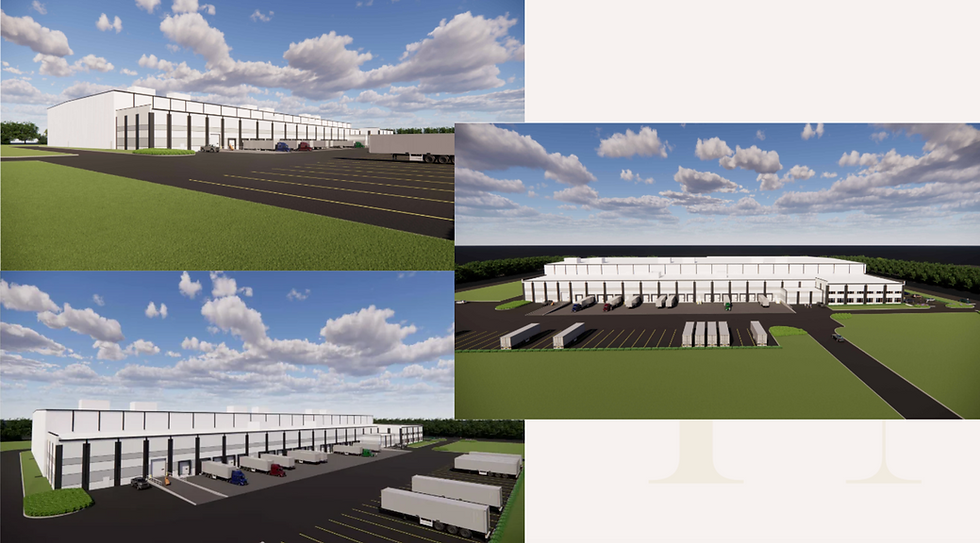
As part of PNC Brands Group’s broader growth strategy in frozen manufacturing, national food distribution, and cold-chain infrastructure, Ice Cream Factory is developing a new 198,000-square-foot frozen and cold storage facility in Lebanon, Missouri.
The facility is planned to add approximately 29,000 pallet positions and create a strategic Midwest distribution platform for Ice Cream Factory’s expanding manufacturing needs, while also supporting select retailers, frozen food companies, ice cream brands, importers, co-manufacturing partners, and cold-chain operators across the industry.
“Our goal is not to build capacity in isolation,” said Gail Kurpgeweit, CEO of PNC Brands Group.
“We see this as part of a broader cold-chain ecosystem. Ice Cream Factory is scaling rapidly, and this facility supports our own growth, but it also creates an opportunity to work with growth-oriented frozen food companies, retailers, logistics partners, and established cold-chain operators who understand where the industry is headed. The strongest infrastructure platforms are built through aligned relationships, shared operating discipline, and long-term capacity planning.”
This expansion represents a significant next step in Ice Cream Factory’s evolution from an ice cream manufacturer into a broader frozen manufacturing and cold-chain platform.
Built for Companies Scaling Frozen Growth
For frozen food companies, capacity planning has become a strategic issue. Seasonal surges, retailer promotions, production runs, imports, club programs, foodservice demand, and holiday volume all place pressure on frozen storage at the same time. Companies with committed capacity can plan production, protect service levels, reduce reactive freight decisions, and move with greater confidence when demand accelerates.
The new Ice Cream Factory storage facility is being designed around that need for control.
Qualified partners will have the opportunity to reserve pallet positions in advance through early capacity agreements, providing committed access to frozen storage during the periods when access matters most. For partners that do not need their full reserved capacity during certain periods of the year, Ice Cream Factory has developed a controlled capacity-sharing structure that allows unused committed pallet positions to be monetized, subject to operating requirements and availability.
The result is a more strategic approach to frozen storage: Capacity that can be planned, protected, and leveraged as part of a broader supply chain strategy.
A Central U.S. Distribution Advantage
In frozen distribution, geography directly affects cost, service, and margin.
Lebanon, Missouri gives frozen food companies a central U.S. distribution point with access to key national markets without relying solely on coastal facilities or
high-congestion logistics hubs. For brands distributing nationally, that position can help simplify freight planning, improve service to retailers and distributors, and create more efficient access to regional distribution centers across the country.
The facility is also planned to include rail spur access, creating an additional freight advantage for long-distance and cross-border movement. Once operational, the rail-enabled freight model is expected to create savings opportunities of approximately 25% to 30% on qualifying lanes moving throughout the United States, Mexico, and Canada.
For frozen food companies working to protect margin while scaling nationally, that type of infrastructure advantage is meaningful.
Designed for Commercial-Scale Frozen Operations
The planned facility will include approximately 29,000 pallet positions across three temperature zones:
Deep frozen storage at -20°F for ice cream and temperature-sensitive frozen products
Frozen storage at -10°F for standard frozen inventory
Refrigerated storage at 38°F for chilled product support
The facility is designed to support the operational requirements of commercial frozen distribution, including inbound receiving, outbound order flow, inventory control, case and pallet handling, order staging, retailer and distributor fulfillment, freight coordination, and integrated 3PL services.
The platform is intended to support companies serving national grocery, club, foodservice, wholesale, and DTC channels, with cold-chain infrastructure built around the realities of modern frozen food movement.
This is not simply added square footage.
It is a purpose-built cold-chain platform designed to connect storage, movement, manufacturing, and distribution in one central Midwest location.
Strengthening Ice Cream Factory’s Manufacturing Platform
The new facility also supports Ice Cream Factory’s continued expansion in ice cream and frozen dessert manufacturing.
As demand grows across branded, private label, foodservice, and co-packed frozen dessert programs, storage and distribution capacity become critical to execution. Production capacity alone is not enough. Finished goods need reliable cold-chain space, efficient outbound movement, and a distribution strategy that protects cost and service.
By expanding frozen storage and distribution infrastructure alongside its growing production capabilities, Ice Cream Factory is building a stronger platform for co-packing, private label manufacturing, seasonal programs, national retail launches, and frozen dessert innovation.
For brands and retailers looking to develop or scale ice cream and frozen dessert products, this expansion creates a more complete path from production to storage to distribution.
Privately Capitalized. Partner-Led. Planned Debt-Free.
This project is being structured as a debt-free infrastructure build with a private circle of aligned, trusted capital partners.
The facility is not being developed as a speculative warehouse project.
It is being built around Ice Cream Factory’s own expanding operating needs, demonstrated industry demand for controlled frozen capacity, and long-term strategic relationships with partners who understand the value of cold-chain infrastructure.
PNC Brands Group and Ice Cream Factory are taking a selective approach to capacity commitments and capital alignment. The focus is disciplined growth with the right partners, the right operating structure, and the right long-term platform strategy.
The capital structure for this phase has been privately organized through PNC Brands Group’s closely held investor network and a select group of strategic partners aligned around long-term food infrastructure, frozen manufacturing, and cold-chain expansion.
Strategic participation outside that existing network is being evaluated selectively, with priority given to established cold-chain operators whose infrastructure, lanes, customer base, or operating expertise complement the platform.
Questions regarding PNC Brands Group’s broader infrastructure strategy may be directed to Gail Kurpgeweit, CEO of PNC Brands Group, LLC, at gail@pivotnorthconsulting.com.
Early Capacity Conversations Are Now Open
Groundbreaking is planned for July or August 2026, with completion estimated within 9 to 12 months. Key zoning and variance milestones have been completed.
Early capacity conversations are now open for qualified frozen food companies, private label retailers, co-manufacturing partners, importers, frozen product distributors, and national brands seeking committed access to Midwest frozen storage capacity.
Available early commitment structures include:
Guaranteed Pallet Capacity
For companies seeking committed frozen storage positions in advance of seasonal, retail, production, import, or national distribution demand.
Priority Access
For companies seeking early alignment on capacity planning, logistics coordination, and future cold-chain support as the facility comes online.
Companies that plan frozen capacity early are better positioned to scale with control, protect margins, and maintain the service levels their customers expect.
For early capacity reservation discussions, contact:
Kelly Morrison, Director of Client Partnerships PNC Brands Group
573-398-4304
Additional project details and milestone updates will be available through the project page.


Comments